
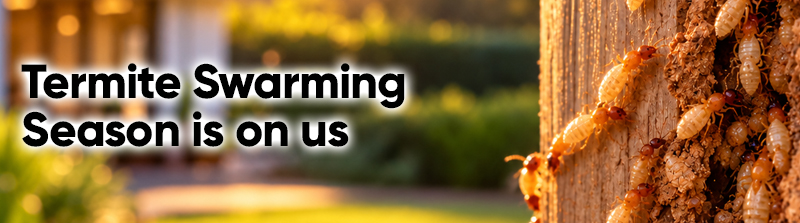
Termite Swarming Season is on us
Termite swarming season in Sydney and similar locations commonly peaks from September through to March, occurring primarily on warm, still, and humid evenings, often the day after rain.
Termites swarm to reproduce and start new colonies when their current nest becomes too large. The main reason for swarming is reproduction. Winged male and female termites (alates) fly out to find a mate and become the king and queen of a new nest.
A secondary reason for swarming is colony size. When a mature colony reaches maximum capacity, it sends out these reproductive flyers to expand its species and geographical range.
Thirdly, swarming allows termites from different locations to mix genes, making future generations stronger and more resilient.
Ideal Weather Triggers and timing
- Sydney Peak: October and November (spring and early summer) see the highest volume of coordinated alate flights.
- Warmth and Humidity: Termites wait for warm, still air and high moisture levels so their soft bodies do not dry out during flight.
- After Rainfall: Rain softens the soil, making it easier for the new pairs to burrow into the ground and start building.
- Attraction to Light: Swarmers are naturally drawn to lights, which is why you often see them clustered near windows, doors, or lamps
- Time of Day: Subterranean termites in local regions typically emerge at dusk or during warm evenings to avoid predators and dehydration.
Action
Termite swarming indicates that there is a nest nearby, but it may well be underground or in a dead tree and require no immediate treatment or response. If the swarm appears inside or close to a building, a thorough inspection is indicated in order to locate the nest.